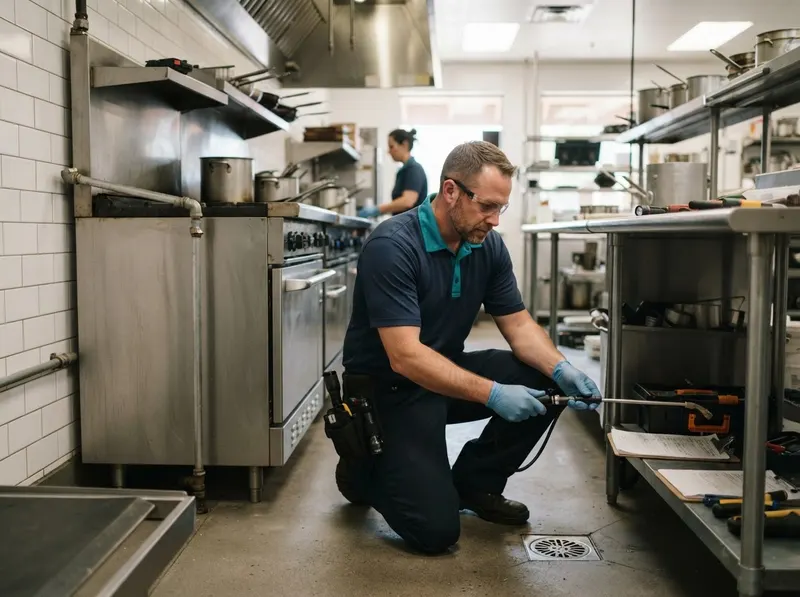
Commercial kitchen pest sanitation delivers targeted mechanical and biochemical elimination of organic attractants where standard cleaning crews cannot reach. In high-volume dining corridors such as Downtown Grand Junction along Main Street or commercial centers near North Grand Junction and Fruitvale, commercial kitchens accumulate fats, oils, and grease inside inaccessible motor housings, line casters, and floor sink junctions. Standard janitorial mopping pushes starch and moisture under base plates, creating high-humidity breeding pockets. Virexa Insect Solutions utilizes pressurized bio-enzymatic foam that expands 15 times its liquid volume to coat the vertical drops of pipe interiors, digesting the microbial film that sustains persistent drain fly larvae.
Treatment selection balances immediate harborage knockdown against strict zero-chemical-contact mandates for food contact surfaces. For German cockroach infestations behind cookline heat shields, technicians deploy high-viscosity baits and particulate desiccant dusts behind hollow stainless steel framing rather than broadcast liquid sprays. This containment strategy prevents airborne drift near prep counters and walk-in coolers. Facilities in Orchard Mesa, Appleton, and the Redlands operating near agricultural ditches often experience heightened seasonal pressure from outdoor filth flies migrating toward exhaust air dampers; in these facilities, dual-wavelength insect light traps with adhesive catch-boards are installed at interior staging docks to capture flying vectors without acoustic grid blow-out.
Operational workflows depend on clear property boundaries and appliance preparation. Before treatment commences, kitchen leadership must ensure all exposed dry goods, produce, and paper service wares are sealed within walk-in refrigeration or transferred off-line. A service minimum of $200 applies to every commercial visit, covering up to 4 floor drains and a single cookline perimeter. The trade-off between monthly preventative maintenance and reactive quarterly flushes centers on compliance risk: monthly sanitation services keep drain biofilm below 1 millimeter, eliminating the breeding conditions for filth flies, whereas unserviced drains quickly breach Mesa County Public Health thresholds and require multi-day corrective shutdowns.