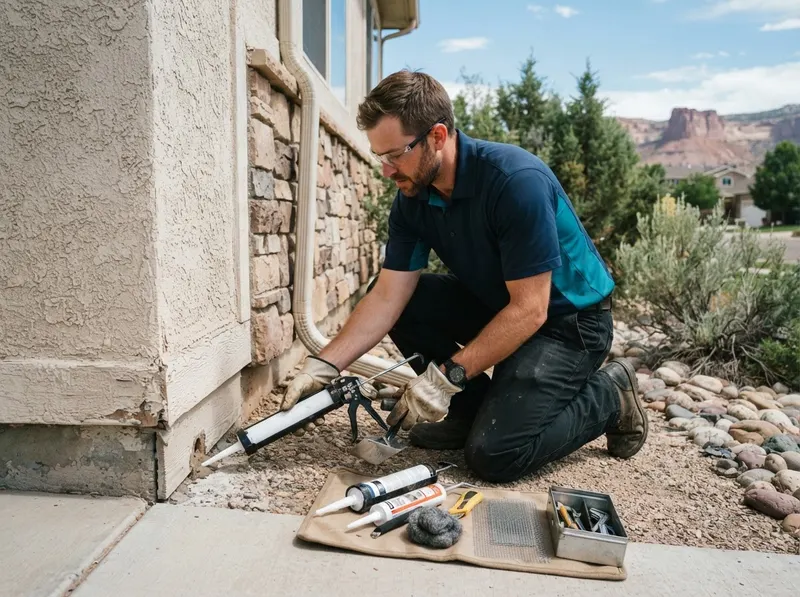
Rodent exclusion separates itself from standard chemical baiting by prioritizing physical architecture over recurring toxic applications. While standard pest control methods deploy exterior tamper-resistant bait stations to reduce ambient perimeter counts, exclusion addresses the structural gaps that permit indoor transit. Mice require an aperture of only one-quarter inch, the diameter of a standard pencil, to breach exterior sheathing, while mature rats pass through openings measuring one-half inch. Virexa Insect Solutions installs 19-gauge quarter-inch galvanized steel wire mesh, polyfoam compounds, and silicone-based caulking to seal voids around foundation sills, weep holes, HVAC utility penetrations, and crawlspace vents. Abatement proceeds concurrently using mechanical snap traps and multi-catch containment units set along active interior travel runs, eliminating the resident rodent population without permitting dead pests to decompose inside wall cavities.
Environmental geography across Grand Junction directly influences seasonal rodent movement into domestic dwellings. Properties situated along the canal networks in Fruitvale, agricultural parcels in Pear Park, and residential zones adjacent to the Connected Lakes Section of James M. Robb - Colorado River State Park experience heightened field mouse migrations each autumn as overnight temperatures drop below freezing. In the rocky terrain of the Redlands and the Ridges, deer mice frequently infiltrate daylight basements and split-level stem walls via expansion joints and framing gaps. Downtown Grand Junction commercial spaces and mid-century foundations in Orchard Mesa and Pomona Park more commonly experience Norway rat entry points surrounding aging sewer transitions and subfloor crawl spaces. Structural pest control operations in Appleton and North Grand Junction account for these distinct terrain challenges by adjusting exterior apron defenses to match the surrounding ground cover.
Property owners must evaluate structural proofing against recurring trapping programs based on long-term capital utility. Trapping alone yields immediate population reduction within three to five days but leaves the building vulnerable to continuous secondary colonization whenever field crops are harvested or cold weather settles into the Grand Valley. Structural exclusion requires a larger upfront investment but establishes a durable mechanical barrier that prevents future entry. The trade-off centers on structural complexity: simple stucco perimeters with accessible utility lines allow rapid, single-visit closures, whereas multi-level homes featuring Spanish tile roofs, unfinished crawlspaces, or stone veneer foundations demand extensive custom metal fabrication and multi-stage testing sequences to seal hidden pathways.